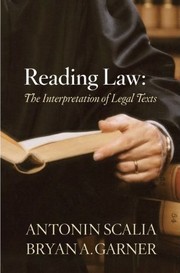
Featured Read: Reading Law
**Welcome to LibOrganizer**
If you love the feeling of a bookshelf that mirrors your mind, you’ve probably already heard of LibOrganizer— the friendly online hub where readers curate their personal collections, discover what fellow bookworms are devouring, and strike up conversations about the stories that move them. It’s part catalog, part club, and all‑around a place where your literary passions find a home.
---
### Why “Reading Law” Deserves a Spot on Your Shelf
You might wonder why a legal‑theory volume would pop up amid your fiction and memoir picks, but **_Reading Law_** by the late Supreme Court Justice Antonin Scalia (with co‑author Bryan A. Garner) is anything but dry courtroom drudgery. In the most approachable way possible, Scalia and Garner turn the often‑opaque world of legal interpretation into a series of lively, bite‑size puzzles that even non‑lawyers can chew on—and love.
#### A Playful Yet Serious Take on Legal Questions
Imagine sitting at a dinner table where the conversation drifts from “Is a burrito a sandwich?” to “Do corporations have a right to privacy?” or “If you trade a gun for drugs, are you ‘using a gun’ in that transaction?” _Reading Law_ tackles exactly those head‑scratching riddles, pulling real court cases into the mix and illustrating each point with crisp, often witty examples. The book isn’t a textbook you have to slog through; it’s a guided tour through the most fascinating corners of constitutional, statutory, and contractual interpretation.
#### Themes That Speak to Everyone
- **Clarity vs. Ambiguity:** Scalia’s famous “originalist” lens is presented in plain English, showing why the precise wording of a law matters—especially when it decides whether a person can vote, a business can operate, or a protest is protected.
- **The Human Side of Rules:** By framing legal doctrines as everyday dilemmas (like the burrito debate), the authors remind us that the law is ultimately about people navigating life’s gray areas.
- **The Power of Precedent:** The book demystifies the concept of stare decisis, turning the idea of “following past decisions” into a logical, almost storytelling exercise.
#### Why You Might Want It in Your Library
1. **For the Curious Mind:** If you enjoy “Did you know?” facts, the book serves up a steady stream of “legal fun facts” that make you the most interesting guest at any gathering.
2. **For the Civic‑Engaged Reader:** Understanding how judges interpret the Constitution equips you to better evaluate current news, elections, and policy debates.
3. **For the Hobbyist Debater:** The clear, example‑rich explanations give you ammunition for spirited discussions—whether you’re on a coffee shop panel or a late‑night Discord chat.
4. **For the Professional Development Seeker:** Even if you’re not a lawyer, a grasp of legal reasoning can sharpen critical thinking, a skill that translates to any career.
#### A Little About the Book’s Style
Scalia’s voice is unmistakable—direct, confident, and occasionally mischievous—while Garner’s knack for plain language keeps the pages readable. Together they pepper the text with “illustrations from actual cases,” meaning you’re not just getting theory; you’re seeing it in action, complete with the courtroom drama that makes each rule feel alive. Published in 2012, the book still feels fresh because its questions are timeless, and its answers are grounded in a logical framework that resonates today.
---
If you’ve ever found yourself puzzling over how a single word can tilt the balance of a Supreme Court ruling, or if you simply love a well‑written, thought‑provoking read, give **_Reading Law_** a try. Add it to your LibOrganizer shelf, tag it under *Judicial Process*, and watch the conversation start—someone else’s comment might already be waiting to spark a new debate.
**Ready to see what else the community is reading, or to share your own literary finds?** Dive into LibOrganizer, explore the recommendations, and let the dialogue begin. Happy reading!